
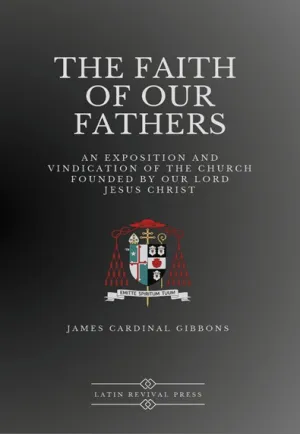
For generations, The Faith of Our Fathers was the book an American Catholic handed to a curious neighbour. Its author, James Gibbons, became Archbishop of Baltimore and a cardinal, but he wrote it as a young missionary bishop in a part of the country where Catholics were few and often misunderstood. Knowing that story helps a modern reader see what the book is, and how to read it well.
A Baltimore priest in the missionary South
James Gibbons was born in Baltimore in 1834 and became a priest of that city’s archdiocese. In 1868, still in his early thirties, he was named Vicar Apostolic of North Carolina, a vast missionary territory with very few Catholics and few priests. In 1872 he became Bishop of Richmond, Virginia.
In those years he preached and taught across his territory, often to “mixed congregations” of Catholics and Protestants, many of whom knew the Catholic Church only from a distance.
Why he wrote The Faith of Our Fathers
Gibbons found that he made converts, but that the books available to explain the faith did not suit his listeners. So he wrote his own. In the preface, dated Richmond, 1876, he explains that the book “substantially embodies the instructions and discourses” he had delivered “before mixed congregations in Virginia and North Carolina.” His chief aim, he writes, was “to bring home the truths of the Catholic faith to our separated brethren.”
The book was published at the end of 1876. It explains in plain language the Catholic teaching on the Church and her authority, Scripture and Tradition, the papacy, the sacraments, the honour given to Mary and the saints, Purgatory and Catholic worship. Gibbons wrote calmly and courteously, drawing often on Scripture, the common ground he shared with his Protestant listeners.
It proved enormously popular. By Gibbons’s own count in the preface to a 1917 edition, some fourteen hundred thousand copies had been published. The Archdiocese of Baltimore describes it as the most popular apologetical work ever written by an American Catholic.
The cardinal and the Baltimore Catechism
Gibbons became Archbishop of Baltimore, the oldest diocese in the United States, in 1877, and in 1886 he was created a cardinal, only the second American to receive that honour. He remained a leading figure of American Catholic life until his death in 1921.
In 1884 he presided over the Third Plenary Council of Baltimore, which ordered a catechism to be prepared for general use. The result, approved by Gibbons in 1885, was the Baltimore Catechism, which taught generations of American Catholics. He was also known for his defence of working people: in 1887 he wrote to Rome in defence of the Knights of Labor, an early labour organisation, which won him a reputation as a champion of the working class.
Reading Gibbons today: history and teaching
A modern reader will notice that The Faith of Our Fathers belongs to its time. It is helpful to keep two things distinct.
The historical context. Gibbons wrote in the nineteenth century, in the style of the apologetics of his day: point by point, often answering objections that circulated among Protestant Americans of his time. Some of his examples, assumptions about other Christians and ways of speaking reflect that setting. Some questions, such as the relationship of Church and state, were framed differently then than in Catholic teaching today.
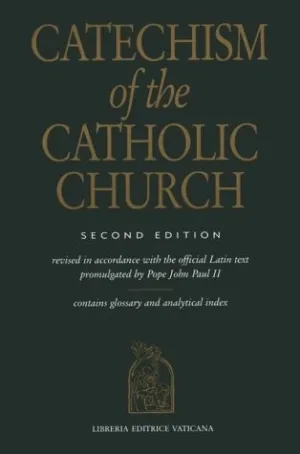
The Church’s teaching. The doctrines Gibbons defends, the Church founded by Christ, the authority of the Pope and bishops, the seven sacraments, the place of Mary and the saints, Purgatory, are taught by the Church today and are set out fully in the Catechism of the Catholic Church. Where his explanations and the Catechism differ in emphasis or vocabulary, the Catechism is the Church’s present authoritative presentation.
The Second Vatican Council also deepened how Catholics speak of other Christians. It teaches that those who “believe in Christ and have been truly baptized are in communion with the Catholic Church even though this communion is imperfect,” and the Catechism adds that “one cannot charge with the sin of the separation those who at present are born into these communities.” The Council likewise declared that “the human person has a right to religious freedom.” Gibbons himself spoke of “separated brethren,” and his charitable tone anticipates much of this, but a reader should read his arguments in the light of this fuller teaching.
How to read it well
- Read a chapter at a time, on the question you most want answered.
- Keep the Catechism beside it. After each chapter, read the corresponding section of the Catechism. You will see the continuity of doctrine and notice where the Church now speaks differently.
- Note the method. Gibbons argues from Scripture, history and reason, and he does so with courtesy. That method is still worth learning.
- Use it for conversation, not combat. Gibbons wrote to win friends for the truth. Share what you learn in the same spirit.
Latin Revival publishes The Faith of Our Fathers, along with the catechism his council commissioned: Baltimore Catechism Book 3, Baltimore Catechism Book 4 and the Complete Baltimore Catechism (Books 1–4). For today’s full statement of Catholic teaching, see the Catechism of the Catholic Church. If you are unsure which Baltimore volume to choose, read Which Baltimore Catechism Should I Read?
Sources and further reading
- Archdiocese of Baltimore: His Eminence James Cardinal Gibbons
- North Carolina Department of Natural and Cultural Resources: James Gibbons historical marker
- James Gibbons, The Faith of Our Fathers, 83rd edition (1917), with the author’s prefaces
- Catholic Encyclopedia: “Plenary Councils of Baltimore”
- Catholic University of America Libraries: the Knights of Labor and Cardinal Gibbons
- Second Vatican Council, Unitatis Redintegratio, 3
- Second Vatican Council, Dignitatis Humanae, 2
- Catechism of the Catholic Church, 811–838: the Church is one
Books in this article
Catechism
Complete Baltimore Catechism (Books 1–4)
Third Plenary Council of Baltimore and Rev. Thomas L. Kinkead
Buy buttons open your country’s Amazon store. As an Amazon Associate I earn from qualifying purchases.