
Parents are the first teachers of the faith. The Catechism says it plainly: parents have “the first responsibility for the education of their children,” and the Christian home is where children first learn to pray. Books cannot do that work for a family, but good books can serve it. A story read together at bedtime, a saint remembered on her feast day, a question from the catechism talked over at dinner: these small habits help children see that the faith belongs to ordinary life.
This guide offers a simple way to begin, and some books to begin with.
Books serve the home; they do not replace it
Before choosing books, it helps to be clear about what they are for. Family reading supports prayer, Sunday Mass, the sacraments and the catechesis your parish offers. It does not replace any of them. A child who hears about St. Thérèse at home and then prays a simple prayer with his parents has learned more than a child who has read many books but never prays.
So keep reading close to prayer. Begin or end with a short prayer, a Sign of the Cross, a Hail Mary or the prayer to a saint you have just read about.
Keep it short and regular
The best family reading habit is one you can keep. Ten minutes most evenings will do more than an hour once a month.
- Choose a time you already share: after dinner, before bed, or on Sunday afternoon.
- Read aloud, even to children who can read for themselves. Hearing a story together makes it a family possession.
- Stop while interest is high. Leave them wanting the next chapter.
- Ask one question, not ten: What did that saint do that was brave? What would you have done?
- Let the Church’s year guide you. Read about a saint on or near the feast day, and choose seasonal books for Advent, Christmas, Lent and Easter.
Match the book to the child
Every child is different, and parents know their own children best. Rather than following an age chart, look at what each child can enjoy and understand.
- Children who are just beginning usually do best with short stories, bright pictures and simple words: a Bible story, a picture book about the Mass, a few sentences about a saint.
- Children who enjoy longer stories are ready for chapter-length lives of the saints and for simple questions and answers about the faith.
- Older children and teenagers can read on their own. What they often need most is someone to talk with afterwards.
Younger children may be upset by the details of martyrdom or suffering in some saints’ stories. Read ahead and decide how much to share.
Stories of the saints
Children love true stories, and the saints offer heroes who loved God in every kind of life.
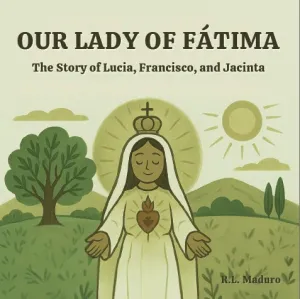
Our Lady of Fátima: The Story of Lúcia, Francisco, and Jacinta tells the story of three shepherd children who prayed, made sacrifices and trusted Our Lady. It is written to be read aloud and opens natural conversations about the Rosary and about prayer for others.
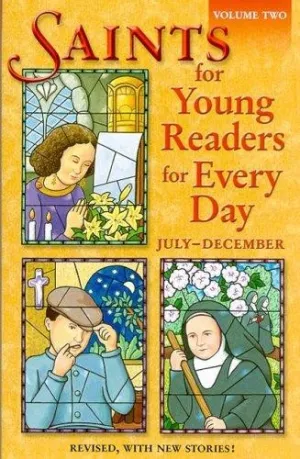
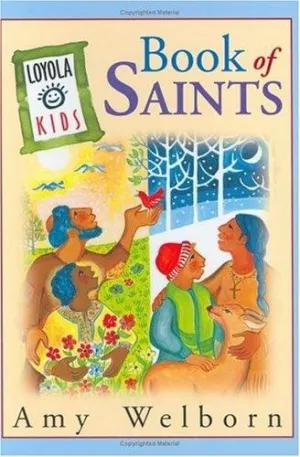
For a short saint’s story each day from July to December, families can use the second volume of Saints for Young Readers for Every Day; the Loyola Kids Book of Saints gathers longer lives that can be read in a sitting. Parents who enjoy the Church’s long memory of the saints may also like to share a short entry from the Roman Martyrology; see What Is the Roman Martyrology, and How Can Families Use It?
Bible stories
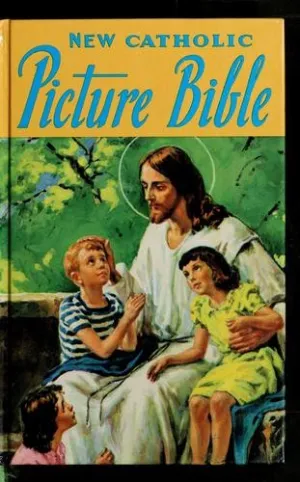
The Bible is the Church’s own book, and children should meet its great stories early: creation, Noah, Abraham, Moses, David, the birth of Jesus, His miracles and parables, His death and Resurrection. The New Catholic Picture Bible retells these stories simply, with pictures throughout. As children grow, read the same passages from the Gospels themselves.
Simple catechesis
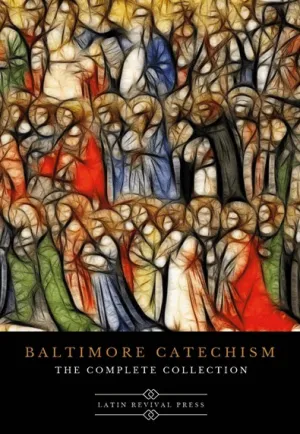
Stories show what the faith looks like; catechesis explains what it teaches. The Baltimore Catechism’s question-and-answer format has served families for generations, because a short question and a clear answer are easy to remember and to talk about.
The Complete Baltimore Catechism (Books 1–4) gathers the whole series in one volume, from the simplest first book to the fuller later ones. Families can take a single question each evening, read it aloud, talk about it and come back to it the next day. For help choosing a volume, see Which Baltimore Catechism Should I Read?
The Mass and the Church’s year
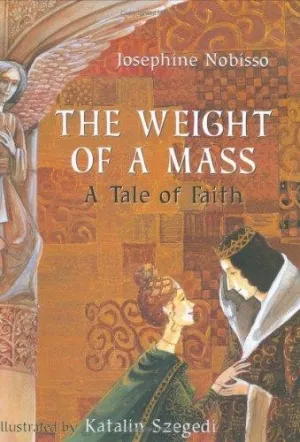
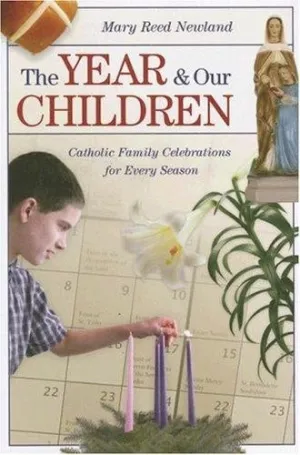
A good picture book can help children understand what happens at Sunday Mass. The Weight of a Mass is a story to read aloud about how much a single Mass is worth. For parents who want to bring the seasons and feasts into the home, The Year and Our Children offers customs, stories and prayers for the whole Church year.
A simple way to begin this week
- Pick one book from this page and one regular time.
- Begin with the Sign of the Cross and read for ten minutes.
- Ask one question and listen to the answer.
- End with a short prayer, perhaps to the saint you read about.
- Do the same tomorrow.
More books for the home are gathered in our reading list Teaching the Faith at Home.
Sources and further reading
- Catechism of the Catholic Church, 1656–1657: the family as the domestic church
- Catechism of the Catholic Church, 2221–2226: the duties of parents
- Catechism of the Catholic Church, 2685: the family as the first place of education in prayer
- Second Vatican Council, Gravissimum Educationis, 3
- St. John Paul II, Familiaris Consortio, 39
Books in this article
Catechism
Complete Baltimore Catechism (Books 1–4)
Third Plenary Council of Baltimore and Rev. Thomas L. Kinkead
Buy buttons open your country’s Amazon store. As an Amazon Associate I earn from qualifying purchases.